Dog Training Books: Why Patience and Positivity Win
By James Young · October 24, 2026 · 4 min read
In brief
The best dog training books focus on positive reinforcement and building trust rather than traditional dominance-based obedience methods. By shifting your perspective, you create a harmonious bond that makes training a joyful experience for both you and your canine companion.
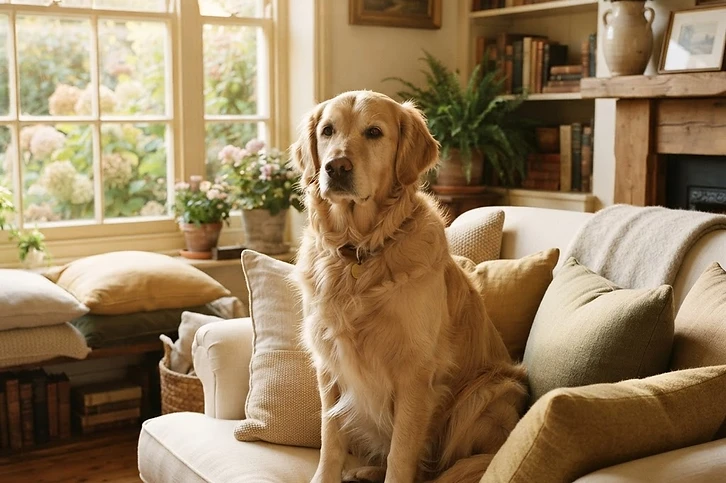
The best dog training books teach us that the secret to a well-behaved pup isn't found in a heavy-handed manual of commands, but in the quiet art of building trust. When searching for dog training books, you will find that the most effective guides emphasize positive reinforcement, patience, and clear communication. Training is not just about getting your dog to sit or stay; it is a profound journey of learning to speak a shared language of love and mutual respect. ## The Foundation of Positive Reinforcement When we look at modern dog training books, a recurring theme is the move away from fear-based tactics. Positive reinforcement is the cornerstone of this evolution. It is about rewarding the behaviors you want to see rather than punishing the ones you don't. Think of it as a form of manifestation: by focusing your energy on the desired outcome, you invite that behavior to blossom more frequently. ### Why Patience is Your Greatest Tool You cannot rush a connection. If you approach training as a chore, your dog will mirror that frustration. However, when you approach sessions with a calm, present state of mind, your dog feels the difference immediately. This is a principle explored in Zen Master Coco and the Law of Attraction by James Young. Coco, a wise dog who serves as a mentor in the book, teaches that our pets are sensitive to our internal frequency. When we are impatient, our dogs become anxious. When we are centered, they become secure. ## Lessons from Wisdom-Based Training Beyond the mechanics of basic commands, high-quality dog training books encourage us to observe our pets as teachers. Here are three core principles for building a deeper bond: 1. Listen to the silence: Sometimes a dog’s behavior is an attempt to communicate a need or a feeling. 2. Celebrate small wins: Every success is a step toward a deeper understanding. 3. Cultivate consistency: Dogs find security in predictable, loving routines. ### A Word from the Master > "A tail wag is a silent prayer of gratitude; answer it with a kind heart, and the universe will fold itself into your lap." — Coco The shift from viewing training as 'obedience' to viewing it as 'collaboration' changes everything. It turns a walk around the block into a meditative practice and a training session into a shared discovery. As noted in Zen Master Coco and the Law of Attraction, the Law of Attraction is just as active in the dog park as it is in our professional lives. If you manifest peace and patience, your dog will manifest the same in return. ### Creating a Harmonious Home Environment Beyond the structured advice found in dog training books, creating a peaceful home is essential. Consider these environmental factors to support your training efforts: * Keep training sessions short and fun. * Always end on a positive note, even if it is just a simple 'sit.' * Ensure your dog has a 'safe space' where they can retreat and feel completely at peace. By incorporating these strategies, you move past the basics of standard guides. You stop looking for quick fixes and start building a relationship that lasts a lifetime. The most influential dog training books remind us that we are not just teaching our dogs how to exist in our world; we are learning how to be better humans in theirs.
Ready to Go Deeper? Let Coco Teach You
If this spoke to something in you, Zen Master Coco and the Law of Attraction takes everything you just read and turns it into a warm, funny, unforgettable journey — manifestation, presence, and unconditional love, as taught by a very wise dog.
Related Questions
Why is positive reinforcement better than punishment?
Positive reinforcement builds trust and motivation by rewarding desired behaviors rather than using fear. It creates a cooperative relationship where your dog wants to listen because they feel safe and understood.
How long should a daily training session be?
Keep sessions short, ideally between 5 to 10 minutes. This prevents your dog from becoming overwhelmed and keeps the experience fun and engaging for both of you.
Can dog training books help with anxious dogs?
Yes, they can be very helpful. Look for books that emphasize confidence-building games and calming techniques to help your dog feel more secure in their environment.